DrawingForInsight
Why do I feel lost in life? 9 hidden reasons you may be feeling stuck
There comes a moment in many people’s lives when something no longer fits.
From the outside, everything may look perfectly fine. You may have a career, responsibilities, relationships, achievements, and a life that others would consider successful.
And yet, somewhere inside, a quiet question keeps returning:
“Is this really my life?”
Perhaps you wake up feeling disconnected from your own days.
Perhaps decisions that once felt clear now feel heavy.
Perhaps the future that once excited you now feels strangely empty.
If you have found yourself searching for answers to questions such as:
Why do I feel lost in life?
Why do I feel stuck?
Why don’t I know what I want anymore?
Why can’t I find my purpose?
You are not alone.
And more importantly, there may be nothing wrong with you.
Feeling lost is often treated as a problem to solve as quickly as possible.
We rush to find new goals.
We consume more information.
We make lists.
We seek advice.
We try harder.
Yet many people discover that the more they force themselves to find answers, the further away those answers seem to move.
What if feeling lost is not a sign that you have failed?
What if it is a sign that an old version of your life no longer reflects who you are becoming?
Over the years, through my work with guided drawing and self-discovery, I have noticed something interesting.
People rarely arrive feeling lost because they lack intelligence, motivation, or capability.
More often, they arrive because they have become disconnected from something essential within themselves.
Let’s explore some of the hidden reasons this can happen.
1. You have outgrown a life that once fit
One of the most common reasons people feel lost is surprisingly simple.
The life that once felt right no longer does.
This does not mean you made the wrong choices.
It simply means you have changed.
The career that excited you ten years ago may no longer reflect your values.
The goals you once pursued may have belonged to a different version of yourself.
Many people try to force themselves back into an old identity because it feels familiar.
But growth rarely works that way.
A tree does not return to being a seed.
And people cannot return to old versions of themselves without experiencing discomfort.
Sometimes feeling lost is simply the feeling of standing between who you have been and who you are becoming.
2. You have been living according to expectations rather than inner truth
From a young age, most of us learn how to become who others expect us to be.
We learn how to be responsible.
Successful.
Productive.
Helpful.
Dependable.
There is nothing wrong with these qualities.
The problem arises when we become so focused on meeting expectations that we lose contact with our own voice.
Many people spend years climbing a ladder only to realise it is leaning against the wrong wall.
The question is not:
“Am I successful?”
The deeper question is:
“Successful according to whom?”
When our lives are guided primarily by external expectations, a sense of emptiness often follows.
Not because we have failed.
But because we have abandoned an important relationship with ourselves.
3. You are searching for Clarity Through Thinking alone
This may sound surprising.
Most people assume that clarity comes from thinking.
If they could just analyse the situation long enough, they would eventually discover the answer.
Yet overthinking often creates the opposite effect.
The mind becomes crowded with possibilities.
Every choice brings new doubts.
Every answer generates another question.
Clarity rarely arrives through endless analysis.
More often, it emerges through awareness.
Through reflection.
Through insight.
Through experiences that allow us to access parts of ourselves that exist beyond logical thinking.
This is one of the reasons I began using guided drawing in my own work.
Sometimes a simple image can reveal what months of thinking could not.
4. You have become disconnected from your creativity
Many adults believe creativity belongs to artists.
In reality, creativity is a human capacity.
It is the ability to imagine, explore, express, and connect.
When creativity is suppressed for long periods of time, people often experience a subtle loss of vitality.
Life becomes functional but flat.
Productive but uninspiring.
Busy but disconnected.
Creativity is not simply about making art.
It is about remaining in relationship with the deeper, more intuitive parts of ourselves.
And when that relationship weakens, feeling lost can become almost inevitable.
5. You are standing between two chapters of your life
Many people assume they should always know where they are going.
But life does not unfold in a straight line.
There are seasons of building.
Seasons of achievement.
Seasons of stability.
And there are also seasons of transition.
Transitions often feel uncomfortable because the old chapter is ending before the new one has fully appeared.
This creates uncertainty.
You may know what you no longer want, but not yet know what you do want.
This in-between space can feel confusing, but it is often where the most important inner changes take place.
The challenge is that we often try to rush through it.
We want immediate answers.
Immediate certainty.
Immediate direction.
Yet some questions cannot be forced.
They need time, reflection, and space to reveal themselves.
6. You Have Been Ignoring What Truly Matters to You
Life has a way of becoming busy.
Responsibilities multiply.
Days fill with tasks.
Years pass.
And before we realise it, we may be living according to habit rather than intention.
When was the last time you asked yourself:
What brings me alive?
What feels meaningful?
What am I longing for?
What am I no longer willing to tolerate?
Many people feel lost not because they lack direction, but because they have stopped listening.
The inner voice that once whispered its desires has become buried beneath obligations and expectations.
Reconnecting with that voice often begins with creating moments of stillness and honest self-reflection.
7. You are looking for One Perfect Purpose
One of the most damaging ideas in personal development is the belief that there is one perfect purpose waiting to be discovered.
People spend years searching for a single answer.
The perfect calling.
The perfect path.
The perfect decision.
Meanwhile, life continues.
Purpose is rarely found all at once.
More often, it unfolds step by step.
One meaningful action leads to another.
One insight reveals the next.
One small act of courage opens a new door.
Instead of asking:
“What is my purpose?”
Try asking:
“What is life inviting me to explore right now?”
This question is often far more useful.
8. You have lost connection with your intuition
Modern life teaches us to trust logic.
To gather evidence.
To analyse.
To compare.
These skills are valuable.
But they are not the whole picture.
There is another form of knowing that many people have forgotten.
Intuition.
Not as something mystical.
But as a quiet inner awareness.
A sense of resonance.
A feeling of truth.
When people become disconnected from their intuition, every decision can feel exhausting.
There are too many options.
Too many opinions.
Too many competing voices.
Part of finding direction involves learning how to hear your own voice again.
Sometimes words help.
Sometimes they do not.
This is why visual practices such as guided drawing can be so powerful.
They allow insights to emerge in a different way.
9. Your feeling lost may actually be an Invitation
What if feeling lost is not the problem?
What if it is the invitation?
An invitation to slow down.
To question old assumptions.
To reconnect with yourself.
To discover a deeper layer of who you are.
Many of the people I have worked with initially wanted one thing:
A quick answer.
A clear plan.
A guaranteed direction.
Yet what they discovered was something far more valuable.
They discovered themselves.
And from that place, direction emerged naturally.
Not because someone gave them the answer.
But because they learned how to access their own wisdom.

What to do when you feel lost in life
If you are feeling lost right now, here are three simple things you can do.
1. Stop trying to solve your entire life
You do not need a five-year plan today.
You only need the next step.
Focus on the next conversation.
The next insight.
The next experiment.
The next small act of courage
2. Create space for reflection
Clarity rarely appears in constant busyness.
Create moments where you can listen.
Walk.
Journal.
Sit quietly.
Draw.
Give yourself permission to pause.
3. Explore beyond words
Some questions cannot be answered through thinking alone.
They need to be experienced.
This is one of the reasons I developed the Drawing for Insight approach.
When we move beyond words and engage with images, symbols, and creativity, we often discover perspectives that were hidden from conscious awareness.
A simple reflection question:
Before you continue with your day, take a moment and ask yourself:
“If I trusted myself a little more, what would I already know?”
Do not rush to answer.
Simply sit with the question.
Notice what arises.
Sometimes the answers we seek are already within us.
They are simply waiting for us to become quiet enough to hear them.
Final thoughts
Feeling lost can be deeply uncomfortable.
Yet it may also be one of the most meaningful experiences of your life.
Many people discover their true direction not when everything is clear, but when they are willing to stay present with uncertainty long enough for something new to emerge.
If you are in that place right now, know that you do not need to have all the answers.
You only need the willingness to take the next step.
And sometimes, that next step begins with seeing yourself differently.
Discover your next step with the Inner Compass Map
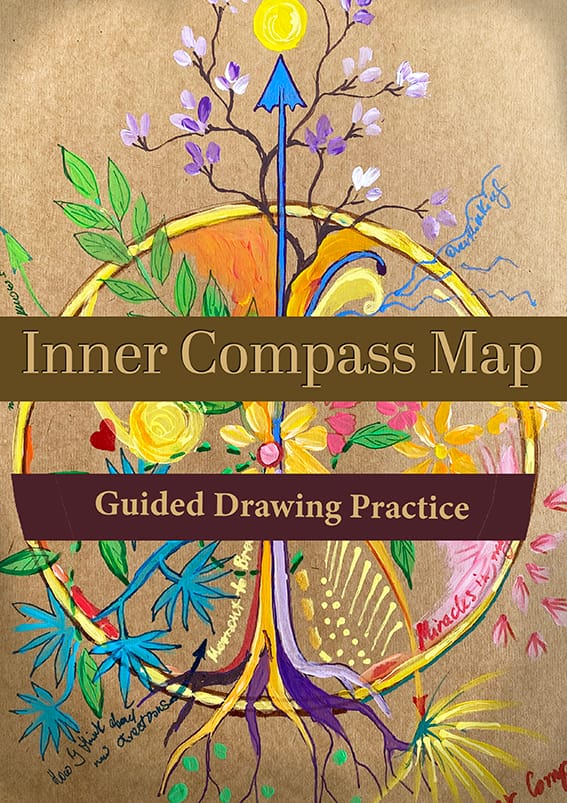
If you would like a gentle and creative way to explore where you are and what may be calling you forward, I invite you to try the Inner Compass Map guided drawing practice.
This guided drawing exercise has helped many people uncover insights that remained hidden when approached through thinking alone.
It is simple, reflective, and designed to help you reconnect with your own inner direction.
Because clarity is rarely something we find.
More often, it is something we uncover.
Frequently asked questions about feeling lost in life
Is it normal to feel lost in life?
Yes. Most people experience periods of uncertainty at some point in their lives. Feeling lost does not necessarily mean something is wrong. Often, it is a sign that an old way of living, thinking, or identifying yourself is no longer aligned with who you are becoming.
Many people experience this during major life transitions, career changes, relationship shifts, midlife, or periods of personal growth.
Why do I feel lost even though I have a good life?
This is more common than many people realise.
You may have a successful career, supportive relationships, financial stability, and still feel disconnected or unfulfilled.
External success does not automatically create inner alignment.
Sometimes the feeling of being lost arises because your outer life looks successful while your inner needs, values, or desires have changed.
Why do I feel lost in my 40s or 50s?
Many people experience a period of deep reflection in midlife.
The goals that motivated you in your 20s and 30s may no longer feel meaningful.
You may begin questioning:
What truly matters to me?
What do I want the next chapter of my life to look like?
Am I living authentically?
Rather than seeing this as a crisis, it can be helpful to view it as a natural invitation to reassess your direction and reconnect with yourself.
Can overthinking make me feel more lost?
Absolutely.
Overthinking often creates the illusion of progress while keeping us stuck in circles.
The mind keeps searching for certainty, analysing possibilities, and trying to predict outcomes.
Yet clarity rarely emerges from endless analysis.
Many people discover greater clarity through reflection, creativity, self-awareness, and direct experience rather than through thinking alone.
How do I find my purpose if I don’t know what I want?
Purpose rarely arrives as a sudden revelation.
More often, it unfolds gradually.
Instead of trying to discover your entire life purpose at once, begin by paying attention to what feels meaningful, energising, or deeply interesting.
Purpose often reveals itself through action rather than through waiting for perfect certainty.
Can drawing really help with self-discovery?
Many people are surprised by the insights that emerge through drawing.
Drawing engages parts of the mind that are different from analytical thinking.
Images, symbols, colours, and visual metaphors can sometimes reveal thoughts, emotions, and desires that are difficult to access through words alone.
You do not need artistic talent for this process.
The goal is not to create beautiful art.
The goal is to create a space where deeper awareness can emerge.
What should I do if I feel completely stuck?
Start small.
You do not need to solve your entire future today.
Choose one small step that creates movement:
Have an honest conversation.
Spend time reflecting.
Try a new experience.
Journal.
Explore a guided drawing exercise.
Seek support from a coach or mentor.
Momentum often begins with a single step rather than a perfect plan.
How can I reconnect with myself when I feel disconnected?
Begin by creating regular moments of reflection.
Many people spend so much time responding to the demands of daily life that they lose contact with their own inner experience.
Simple practices such as journaling, mindful walks, meditation, or guided drawing can help you slow down and reconnect with your thoughts, feelings, values, and aspirations.
The answers are often closer than they appear.
They simply need space to emerge.
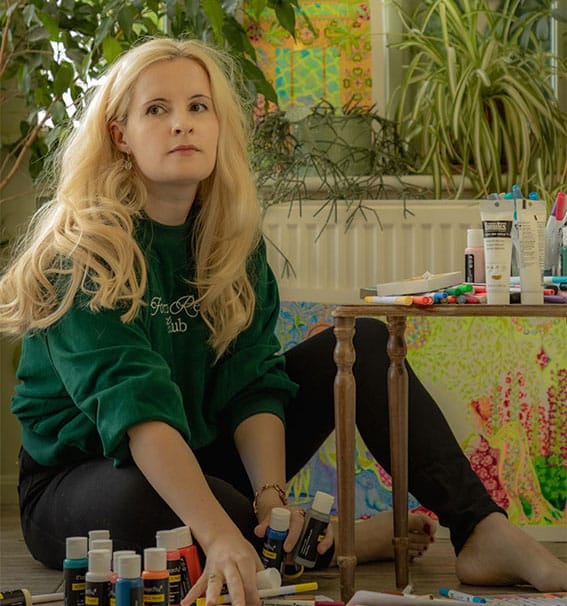
HEY, I’M ANYA
... ... I don’t give advice on how to live your life.
I guide you through a process where you see what’s true for you - visually, emotionally, intuitively.
The drawings become mirrors.
They show you something you couldn’t access before.
From there, change becomes natural.
Not forced. Not mental. Real.
People work with me when they’ve tried thinking, talking, analysing - and know something deeper is needed.
If you’re ready to meet your inner world in a different way, this work opens a door words alone often can’t


Get a free Guided Drawing Practice - enter your name & email and I will email you the access link.
Created with © systeme.io