DrawingForInsight
Why overthinking never creates clarity
Have you ever spent days, weeks, or even months trying to think your way into a decision?
Perhaps you have made endless lists.
Read books.
Listened to podcasts.
Asked friends for advice.
Imagined every possible outcome.
And yet, instead of feeling clearer, you feel more confused than when you started.
Many people assume that clarity comes from thinking.
It seems logical.
If a problem exists, surely the answer is to think about it until the solution appears.
Yet when it comes to life’s deeper questions, something surprising often happens.
The more we think, the less clear we become.
Questions multiply.
Doubts increase.
New possibilities appear.
And the mind continues searching for certainty that never quite arrives.
Overthinking is one of the most common reasons people feel stuck, lost, and disconnected from their own direction.
The challenge is not that thinking is bad.
Thinking is an extraordinary tool.
The challenge is that many of us have been taught to use thinking for questions it was never designed to answer.

What Is Overthinking?
Overthinking is not simply thinking a lot.
It is becoming trapped in repetitive mental loops that fail to move us forward.
You revisit the same question repeatedly.
You analyse every possibility.
You consider every risk.
You imagine every outcome.
And despite all this effort, no real clarity emerges.
Instead, you may notice:
indecision
self-doubt
anxiety
mental exhaustion
difficulty taking action
fear of making the wrong choice
The mind begins to believe that one more thought will finally produce certainty.
But certainty remains out of reach.
Why overthinking feels productive
One reason overthinking is so difficult to recognise is that it often feels responsible.
It feels as though you are doing something useful.
After all, you are trying to make a good decision.
You are trying to avoid mistakes.
You are trying to understand yourself.
The problem is that overthinking creates the illusion of progress.
You feel busy internally.
But movement is not the same as progress.
Many people spend months thinking about a decision that could have become clearer through a single meaningful action.
The mind mistakes activity for insight.
And so the cycle continues.
The hidden promise of overthinking
Beneath overthinking, there is often an unspoken belief:
“If I think long enough, I will eventually become completely certain.”
This belief is understandable.
Certainty feels safe.
Certainty feels comforting.
Certainty feels like protection from failure, disappointment, and regret.
Yet most meaningful decisions in life do not come with certainty.
Changing careers.
Starting a business.
Beginning a relationship.
Ending a relationship.
Following a creative calling.
Moving to a new place.
These decisions rarely arrive with guarantees.
Waiting for complete certainty often means waiting forever.

Why thinking alone cannot create clarity
This may sound surprising.
Thinking is excellent for solving technical problems.
It can help us calculate, organise, compare, and analyse.
But many of life’s most important questions are not technical problems.
Questions such as:
What do I truly want?
What feels meaningful?
What is my next step?
Why do I feel unfulfilled?
What direction should I take?
These questions involve values.
Feelings.
Experiences.
Intuition.
Possibilities.
They require more than logic alone.
Imagine trying to understand a piece of music by reading the sheet music without ever listening to it.
You may understand the structure.
But you miss the experience.
The same is true of many life decisions.
You can analyse endlessly.
Yet still remain disconnected from what you genuinely feel.
The difference between Information and Insight
One of the greatest misconceptions about clarity is that more information automatically creates better decisions.
Often, the opposite is true.
Many people already have enough information.
What they lack is insight.
Information comes from outside.
Insight emerges from within.
Information tells you what other people think.
Insight helps you recognise what feels true for you.
Information accumulates.
Insight transforms.
And while information can be collected endlessly, insight often appears unexpectedly when we create space for it.
Signs you may be overthinking
You may be overthinking if:
You keep revisiting the same decision without moving forward.
You seek more information even when you already know enough.
You frequently imagine worst-case scenarios.
You struggle to trust your own judgement.
You feel mentally exhausted but no clearer.
Every possible option seems both right and wrong.
If several of these feel familiar, you are not necessarily lacking clarity.
You may simply be trapped in a cycle that prevents clarity from emerging.

What actually creates clarity?
If clarity does not come from thinking harder, where does it come from?
In my experience, clarity tends to emerge through three things:
1. Awareness
Before we know where we are going, we need to understand where we are.
Many people try to skip this step.
They rush toward answers before truly understanding their current experience.
Awareness invites us to slow down and observe.
What am I feeling?
What keeps repeating?
What am I avoiding?
What am I longing for?
Clarity often begins with honest observation.
2. Experience
Many questions cannot be answered theoretically.
They need to be lived.
You may not discover your next direction by thinking about it.
You may discover it through taking a small step.
Having a conversation.
Trying something new.
Exploring an idea.
Action often reveals information that thinking never could.
3. Reflection
Life constantly provides signals.
But without reflection, those signals are easy to miss.
Reflection creates the conditions for insight.
Journaling.
Walking.
Meditation.
Creative practices.
Moments of quiet observation.
These experiences help us hear what constant mental noise often drowns out.
Why Creativity can reveal what Thinking cannot
One of the reasons I've created The Drawing For Insight method, where guided drawing is a key tool for self-discovery, is because many people arrive believing they need more answers.
What they often need is a different way of listening.
When we draw, we engage different parts of ourselves.
Images, symbols, colours, and visual metaphors can sometimes reveal patterns that remain hidden when approached through analysis alone.
The goal is not artistic skill.
The goal is awareness.
A simple drawing can sometimes reveal more than weeks of overthinking.
Not because drawing is magical.
But because it helps us step outside familiar mental loops.

A simple practice for moments of overthinking
The next time you notice yourself trapped in endless analysis, try this.
Take a piece of paper.
Draw a small circle in the centre.
Inside the circle, write:
What I Know
Outside the circle, write:
What I Cannot Yet Know
Spend a few moments listing each.
You may be surprised by how much mental energy is being spent trying to solve questions that simply cannot be answered today.
Clarity often increases when we stop demanding certainty from the future.
Why taking one small step matters more than finding the perfect answer
Many people believe they need complete clarity before taking action.
In reality, action often creates clarity.
Imagine driving at night.
Your headlights do not illuminate the entire journey.
They only reveal a small section of the road ahead.
Yet that is enough.
Life often works the same way.
You do not need to see the entire path.
You only need enough clarity for the next step.
And after taking that step, the next part of the road becomes visible.
What if you trusted yourself more?
Most people who struggle with overthinking are not lacking intelligence.
They are lacking trust.
Trust in their own experience.
Trust in their own perceptions.
Trust in their ability to navigate uncertainty.
The mind keeps searching because it believes certainty will create safety.
Yet true confidence often develops differently.
It develops through experience.
Through reflection.
Through discovering that you can move forward even without having every answer.
Overthinking is rarely a sign that you are incapable of finding clarity.
More often, it is a sign that you have been searching in the wrong place.
Clarity is not usually found through endless analysis.
It emerges through awareness.
Through experience.
Through reflection.
Through creating enough space for insight to appear.
The next time you find yourself asking the same question for the hundredth time, consider a different possibility.
Perhaps you do not need another thought.
Perhaps you need a different way of listening.

A gentle invitation
If this article resonated with you, you may enjoy a free video, a simple guided drawing practice designed to help you step out of overthinking and reconnect with what is already present within you.
Sometimes clarity begins not with another answer, but with a different question.
And sometimes, it begins with a blank page.
Frequently asked questions
Can overthinking cause confusion?
Yes. Overthinking often creates mental noise that makes it difficult to recognise what you already know. The more possibilities we analyse, the harder it can become to hear our own inner guidance.
Why do I overthink everything?
Overthinking is often linked to a desire for certainty. The mind tries to protect us from mistakes, disappointment, or regret by analysing every possible outcome. Unfortunately, this usually creates more confusion rather than more clarity.
How do I stop overthinking and gain clarity?
Rather than trying to force your mind to stop, focus on creating space for awareness. Reflection, journaling, mindful walks, guided drawing, and small actions can all help shift you out of repetitive mental loops.
Is overthinking related to perfectionism?
Often, yes. Perfectionism can create the belief that there is one perfect decision that must be discovered before taking action. This belief frequently fuels overthinking and indecision.
Can creativity help with clarity?
Many people find that creative practices help them access insights that feel difficult to reach through analysis alone. Creativity engages different ways of knowing and can reveal perspectives that remain hidden in purely logical thinking.
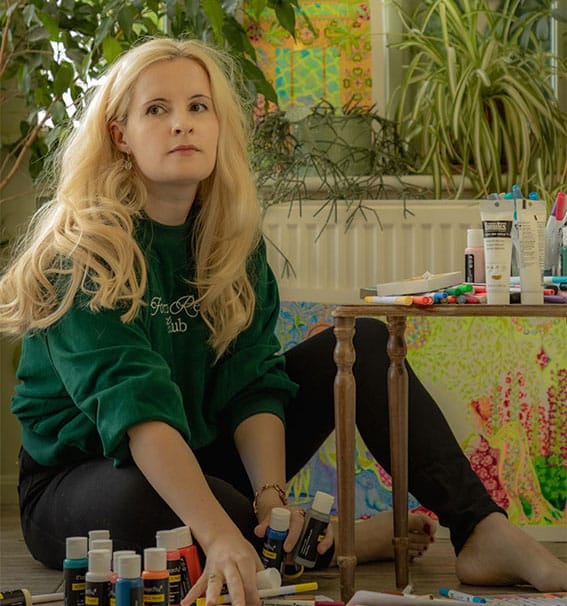
HEY, I’M ANYA
... ... I don’t give advice on how to live your life.
I guide you through a process where you see what’s true for you - visually, emotionally, intuitively.
The drawings become mirrors.
They show you something you couldn’t access before.
From there, change becomes natural.
Not forced. Not mental. Real.
People work with me when they’ve tried thinking, talking, analysing - and know something deeper is needed.
If you’re ready to meet your inner world in a different way, this work opens a door words alone often can’t


Get a free Guided Drawing Practice - enter your name & email and I will email you the access link.
Created with © systeme.io